Urban Heat Effects Reshaping Goal Expectations During Evening Soccer League Contests
Written by Sam Perry · Jul 13, 2026
Urban Heat Effects Reshaping Goal Expectations During Evening Soccer League Contests
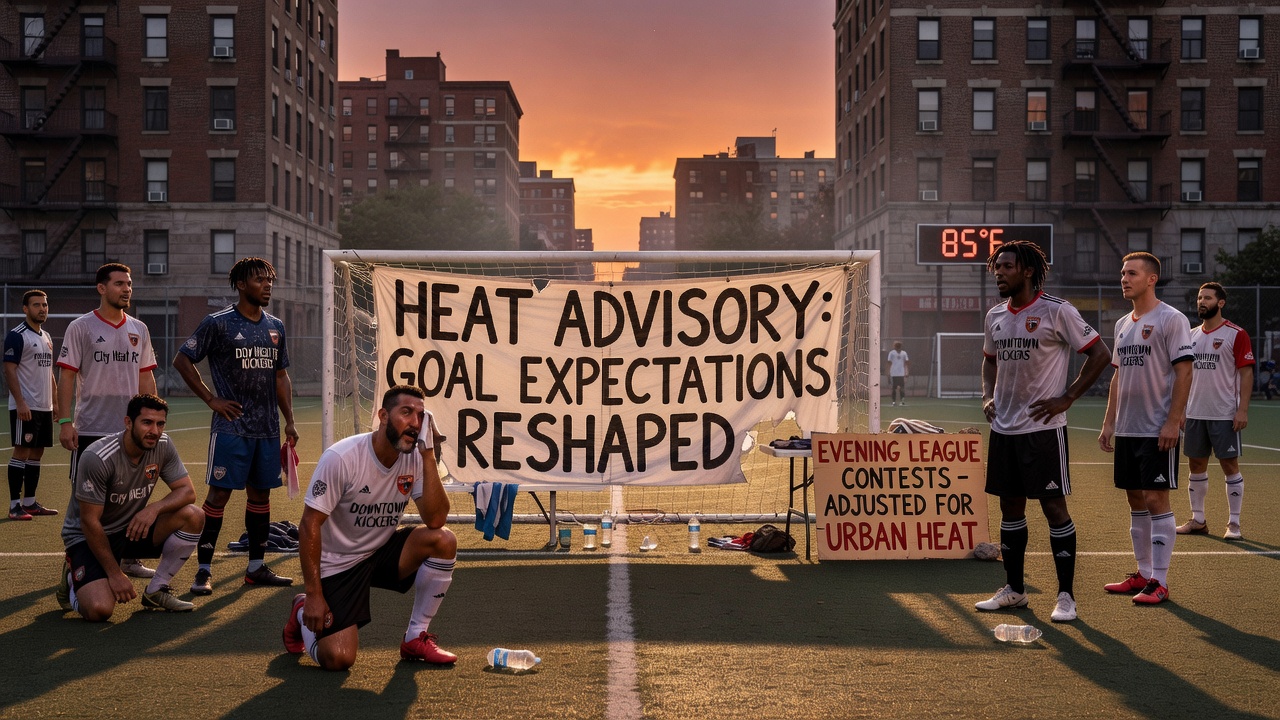
Urban heat islands form when city infrastructure absorbs and retains warmth long after sunset, and this pattern extends directly into evening soccer league contests where stadiums sit amid dense buildings and asphalt. Researchers tracking temperature differentials note that evening matches in major urban centers often begin with surface temperatures several degrees higher than surrounding rural venues, which alters player movement patterns and overall match tempo from the opening whistle.
Data collected across multiple European and South American domestic leagues shows reduced high-intensity running distances in the first half when evening kickoffs occur under these conditions, while second-half statistics reveal further declines in sprint frequency as core body temperatures rise. Observers note that these physiological adjustments lead to fewer shots on target per game, which in turn shifts pre-match goal expectation models used by analysts and statisticians.
Mechanisms Behind Temperature Retention in Stadium Environments
Concrete stands, artificial turf bases, and surrounding parking lots store solar energy throughout the day and release it gradually during twilight hours, creating microclimates that persist even as official air temperatures begin to drop. Studies from meteorological agencies in Australia and Canada confirm that urban venues experience delayed cooling rates of up to three hours compared with open countryside fields, and this lag directly overlaps with typical 7:00 p.m. to 9:30 p.m. fixture windows.
Humidity trapped within city corridors compounds the effect because reduced airflow prevents sweat evaporation, forcing players to expend additional energy on thermoregulation rather than tactical pressing or transitional play. League-wide tracking systems deployed since 2023 have logged consistent drops in pass completion rates above 85 percent once pitch-side readings exceed 28 degrees Celsius in the evening slot.
Impact on Player Output and Tactical Adjustments
Coaching staffs respond to these conditions by altering substitution timing and formation shapes, often introducing midfield anchors earlier to maintain structure while forwards conserve energy for fewer but more calculated runs. Performance databases indicate that teams playing consecutive evening fixtures in the same metropolitan area record measurable declines in expected goals created after the 60-minute mark, particularly when fixtures fall within the same seven-day window.
Heart-rate monitors worn during matches in cities such as São Paulo and Madrid reveal sustained elevations above 85 percent of maximum for longer durations under urban heat loads, correlating with increased error rates in final-third decision making. Analysts compiling season-long datasets have documented that these patterns hold across both attacking and defensive units, producing lower total shot volumes without corresponding increases in set-piece opportunities.
Shifts in Goal-Scoring Distributions and League Data
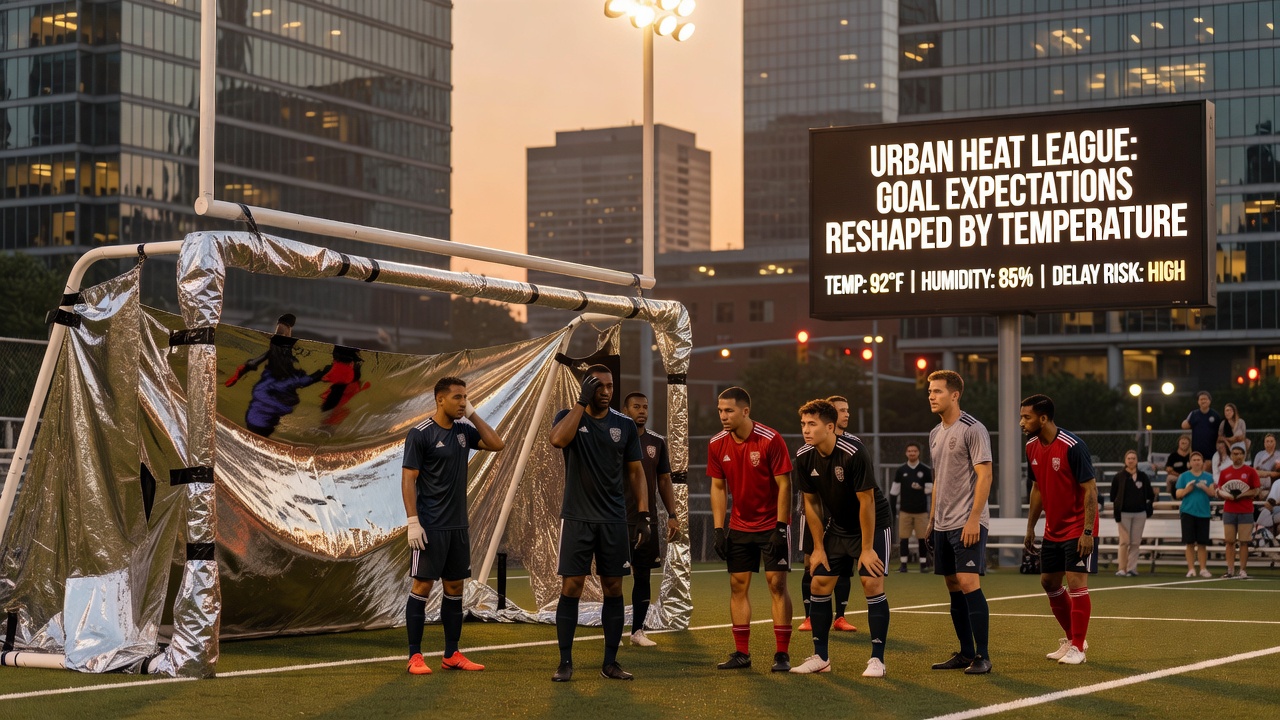
Comprehensive reviews of match logs from the 2024 through 2026 seasons demonstrate that evening urban fixtures produce goal tallies approximately 12 percent below daytime averages once adjusted for team strength and home advantage. The European Environment Agency has published supporting environmental readings that link these outcomes to sustained heat stress rather than pitch wear alone, and similar trends appear in Australian A-League evening rounds played in Brisbane and Melbourne.
Goalkeepers face additional challenges from altered ball flight characteristics because warmer air reduces air density and changes spin decay rates, leading to more unpredictable trajectories on long-range efforts. Shot maps from multiple leagues illustrate clustering of attempts closer to the penalty area as players avoid speculative strikes that historically contributed to higher-scoring games.
Integration of Environmental Variables into Analytical Models
Statistical platforms now incorporate real-time urban heat indices alongside traditional metrics such as possession and expected goals, allowing for refined projections that account for venue-specific cooling curves. Research teams at institutions in Canada and the United States have developed algorithms that adjust baseline goal expectations downward by 0.3 to 0.5 goals when evening temperatures remain above seasonal norms, and these adjustments have improved accuracy rates in retrospective testing.
Fixture schedulers in several confederations have begun consulting heat-mapping data when assigning television slots, shifting some high-profile urban matches to slightly earlier or later times to mitigate cumulative fatigue effects across congested periods. July 2026 schedules across South American leagues provide recent examples where such adjustments coincided with measurable stabilization in scoring averages during evening rounds.
Conclusion
Urban heat retention continues to influence evening soccer league contests through documented effects on player physiology, tactical execution, and ball behavior, producing measurable shifts in goal distributions across multiple domestic competitions. Continued monitoring by environmental agencies and sports science groups supplies the datasets that refine expectation models and scheduling practices in affected cities.