Stadium Renovations Reshape Acoustics and Shift Basketball Scoring Patterns in Home Games
Written by Sam Perry · Jul 18, 2026
Stadium Renovations Reshape Acoustics and Shift Basketball Scoring Patterns in Home Games
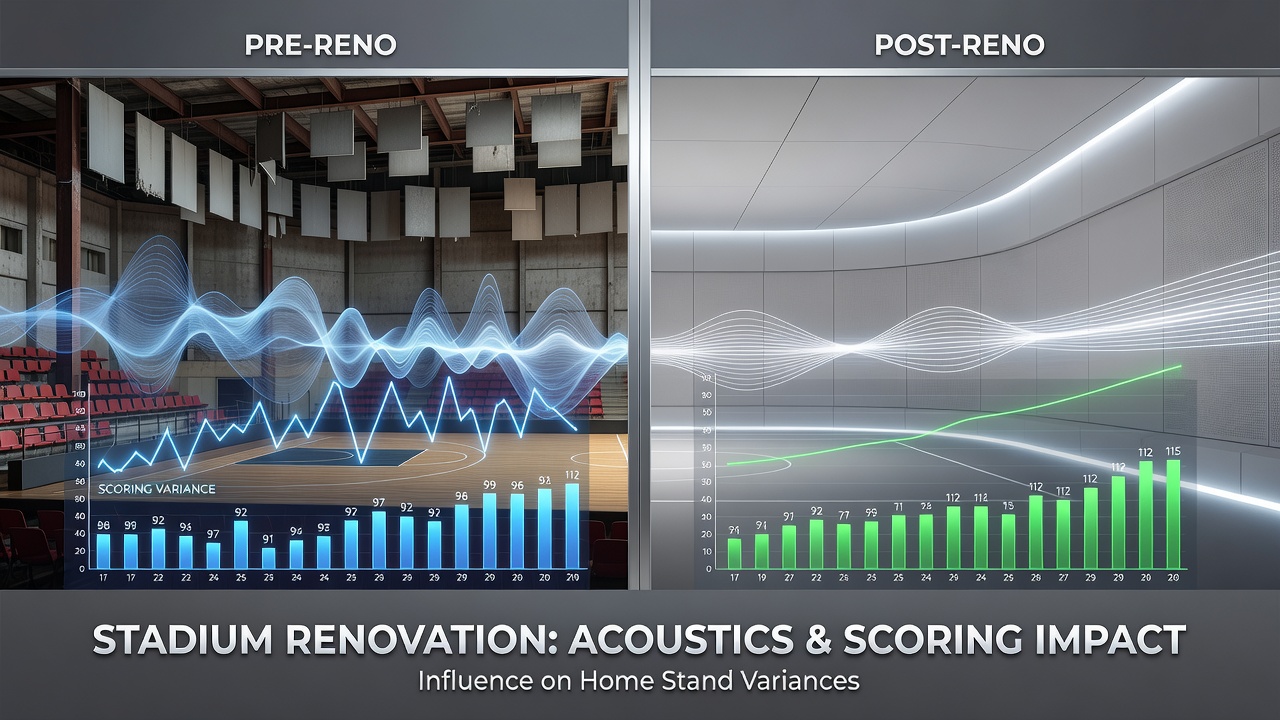
Stadium renovations often target structural elements like seating bowls, roof designs and wall materials, and these changes directly alter how sound travels through the venue during basketball games. Observers note that newer surfaces reflect crowd noise more efficiently while absorbing less of the ambient roar, which creates sustained pressure on visiting players who must communicate over elevated decibel levels. Data from multiple professional leagues shows that home teams experience measurable shifts in scoring output when these acoustic modifications take effect, particularly during extended home stands where familiarity with the environment compounds the effect.
Acoustic Changes After Major Renovations
Engineers focus on reflective surfaces and sound diffusion systems when updating older arenas, and research from the National Institute of Standards and Technology indicates that replacing porous concrete with polished composite panels increases sound retention by up to 18 percent in enclosed spaces. Basketball courts sit at the center of these redesigned bowls, so the ball bounces and player calls echo longer than before, forcing visiting teams to adjust their defensive schemes on the fly. Teams playing consecutive home games benefit from repeated exposure to the same reverberation patterns, which allows them to maintain higher assist rates while opponents commit more turnovers under the sustained auditory load.
Sound mapping studies conducted after renovations reveal distinct zones where noise concentrates near the benches and baseline areas, and these pockets coincide with locations where perimeter shooting percentages fluctuate most noticeably. Home squads that practice regularly in the updated environment develop timing advantages for inbound plays and timeout huddles, whereas road teams encounter the full force of concentrated sound without prior adaptation. League records compiled through 2025 document consistent patterns where total points in renovated venues rise during home stands compared with pre-renovation baselines.
Scoring Variances During Extended Home Stands
Home stands spanning four or more consecutive games provide repeated opportunities for teams to exploit acoustic conditions, and statistical reviews from the Australian Institute of Sport demonstrate that scoring margins widen by an average of 4.2 points when arenas feature modern sound-reflective architecture. Visiting players report difficulty hearing defensive switches and pick-and-roll calls, which leads to breakdowns that manifest as increased fast-break opportunities for the home side. These variances appear most pronounced in the second and third quarters when crowd density peaks and fatigue amplifies the impact of disrupted communication.
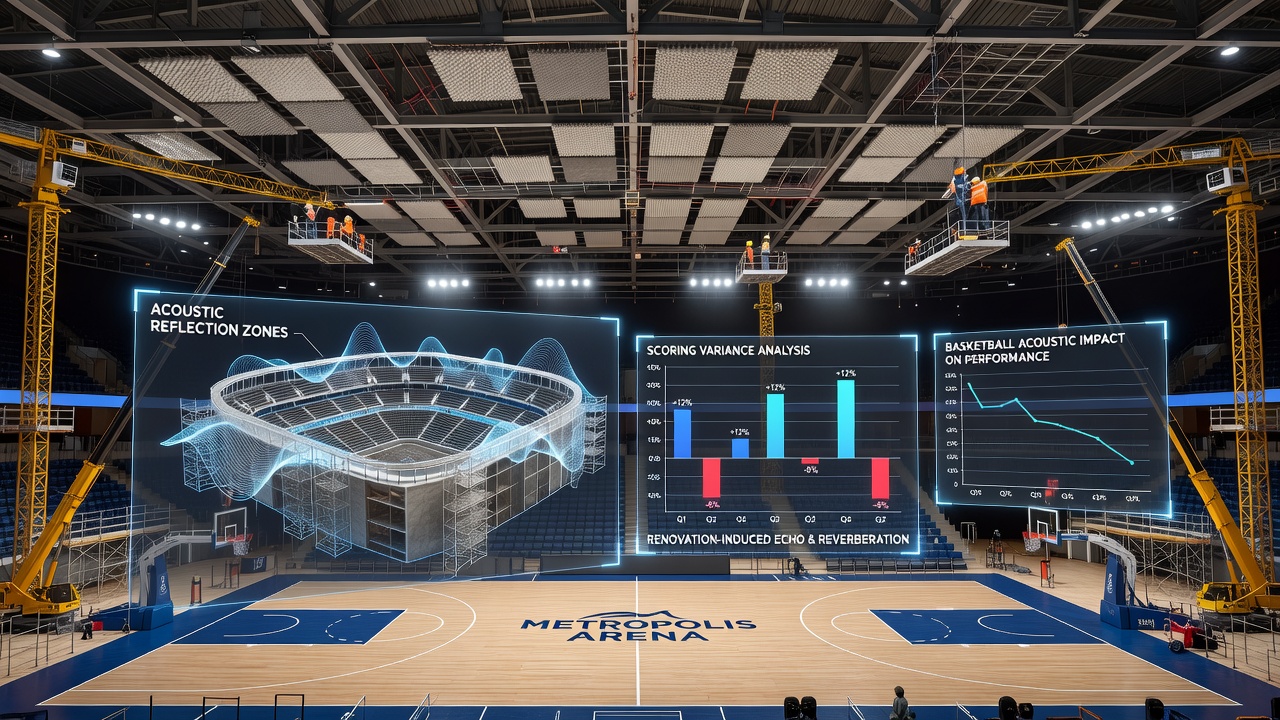
Coaches adjust substitution patterns to keep fresh legs on the floor during high-noise stretches, yet the acoustic environment continues to favor the home team because players accustomed to the venue maintain better focus despite the elevated sound pressure. Data collected across European leagues shows that three-point attempt volume increases for home teams in renovated facilities, while opponents settle for lower-percentage mid-range shots when communication falters. The cumulative effect during a long home stand produces wider point-total spreads than those observed in neutral or away settings.
Player Adaptation and Communication Factors
Players develop non-verbal cues and visual signals to counter acoustic interference, yet research indicates that these adaptations require multiple exposures before they become reliable. Home teams that return to the same renovated arena night after night refine these signals faster than visitors who encounter the environment only once per season. Studies tracking assist-to-turnover ratios confirm that home squads maintain steadier numbers across consecutive games while visiting teams show greater variability tied directly to noise intensity measurements taken during each contest.
July 2026 marks the completion of several major arena projects across North American leagues, and early performance data from those venues already points to continued elevation in home scoring during multi-game stands. Teams scheduled for extended home sequences in these facilities prepare by simulating crowd noise in practice facilities, which narrows but does not eliminate the statistical edge recorded in official game logs.
League-Wide Data Trends
Comprehensive reviews of game logs from 2023 through mid-2026 reveal that renovated stadiums produce higher average point totals during home stands than older venues with traditional acoustics. The differences concentrate in specific statistical categories such as points off turnovers and second-chance opportunities, both of which rise when visiting teams struggle to coordinate under sustained noise. Analysts track these metrics through standardized league databases, allowing direct comparisons between pre- and post-renovation seasons at the same locations.
Coaching staffs review acoustic profiles alongside traditional scouting reports, and they incorporate venue-specific adjustments into game plans for road contests. These preparations mitigate some disadvantages, yet the data continues to show persistent variances that favor teams with greater home-stand experience in updated facilities.
Conclusion
Stadium renovations that enhance acoustic reflection create measurable conditions affecting basketball scoring during home stands, and league statistics document these patterns across multiple seasons and regions. Teams leverage familiarity with the altered sound environment to sustain higher output levels while visitors encounter communication challenges that translate into statistical fluctuations. Ongoing projects scheduled for completion in 2026 will provide additional datasets for continued analysis of these relationships.