Replay ripples: how VAR reviews quietly tilt in-play soccer goal markets at major tournaments
Written by Mia Günther · Jul 27, 2026
Replay ripples: how VAR reviews quietly tilt in-play soccer goal markets at major tournaments
Video Assistant Referee systems now shape in-play soccer goal markets at every major tournament, and the effects appear through timing delays, overturned decisions, and shifted probabilities on over/under lines plus next-goal bets. Tournaments such as the UEFA European Championship and FIFA World Cup deploy VAR across multiple matches each round, and data from those events show how reviews cluster around goal-mouth incidents that directly move live odds.
VAR protocols and their timing in tournament play
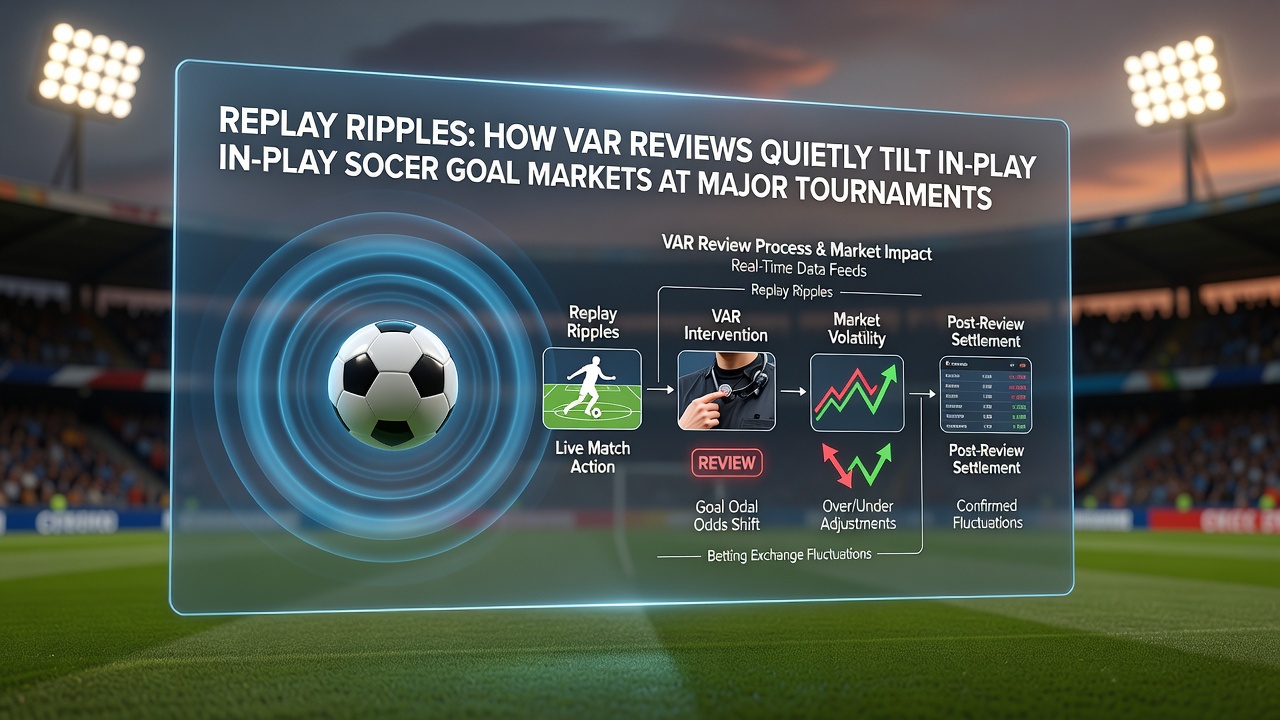
Officials follow FIFA-mandated review procedures that require the on-field referee to pause play while the VAR team examines footage for clear and obvious errors or serious missed incidents. These pauses average between 60 and 90 seconds for straightforward checks yet stretch beyond two minutes when multiple angles or offside lines require calibration. Because in-play goal markets update continuously, any extended stoppage freezes betting activity and forces bookmakers to widen spreads or suspend markets until the outcome clears.
Researchers tracking tournament data note that VAR interventions occur most frequently in the opening 15 minutes and the final 15 minutes of halves, periods when goal markets already carry elevated volatility. The same studies indicate that roughly 8 percent of goals awarded on the field in recent World Cup and European Championship editions receive VAR review, and approximately one third of those reviews result in the goal being disallowed.
Market reactions during live goal betting windows
Bookmakers adjust goal-line totals and next-goal probabilities within seconds of a VAR check commencing, and those adjustments reflect historical overturn rates rather than the immediate on-field call. When a potential goal enters review, live odds on over 2.5 goals often drift toward the under side because the chance of the goal standing drops until confirmation arrives. Bettors who place wagers in that window encounter altered payouts once the referee signals the final decision.
One documented sequence from the 2024 European Championship showed a first-half goal reviewed for handball; markets suspended for 107 seconds, reopened with the total goals line shifted by 0.25, and settled once the goal was disallowed. Similar patterns repeat across group-stage matches where fixture congestion leaves teams fatigued and more prone to set-piece incidents that trigger reviews.
Patterns observed across recent major events
Statistics compiled from the 2022 FIFA World Cup and the 2024 UEFA European Championship reveal that VAR reviews alter the final goal count in 4.2 percent of matches, a figure that rises to 6.8 percent when only knockout-stage games are examined. Those altered counts directly affect settled in-play bets on both team total goals and match total goals. Observers tracking betting volumes report that liquidity on goal markets drops sharply during reviews and rebounds only after the referee restarts play.
July 2026 brings the expanded 48-team FIFA World Cup across North American venues, and preliminary technical documents from FIFA indicate that VAR protocols will remain consistent with prior tournaments while adding semi-automated offside technology to shorten review times. Even with faster processing, the volume of matches increases the absolute number of reviews expected, and in-play goal markets at those venues will still face periodic suspensions tied to high-stakes incidents near the penalty area.
Data sources and regulatory context
Figures released by FIFA technical reports document the frequency and outcomes of VAR interventions across confederation tournaments. Separate analysis from the Canadian Sport and Gambling Research Network examines how live betting operators in regulated North American markets respond to VAR delays during international soccer events. Those datasets show consistent patterns: goal-market suspensions cluster around the same types of incidents regardless of venue, and the duration of each suspension correlates with the complexity of the review rather than the stage of the tournament.
Conclusion
VAR reviews continue to influence in-play soccer goal markets through measurable delays and decision reversals that alter live probabilities at major tournaments. Tournament organizers maintain standardized protocols that balance accuracy with game flow, yet those protocols still produce windows where betting activity pauses and odds adjust. As the 2026 World Cup approaches, the expanded schedule will test whether incremental technology upgrades reduce the average review time enough to limit market disruptions, while historical data already indicate that goal-related betting lines remain sensitive to every confirmed or overturned decision.