Referee Rotation Cycles Reshaping Over/Under Totals in Mid-Tier South American League Fixtures
Written by Eden Perry · May 23, 2026
Referee Rotation Cycles Reshaping Over/Under Totals in Mid-Tier South American League Fixtures
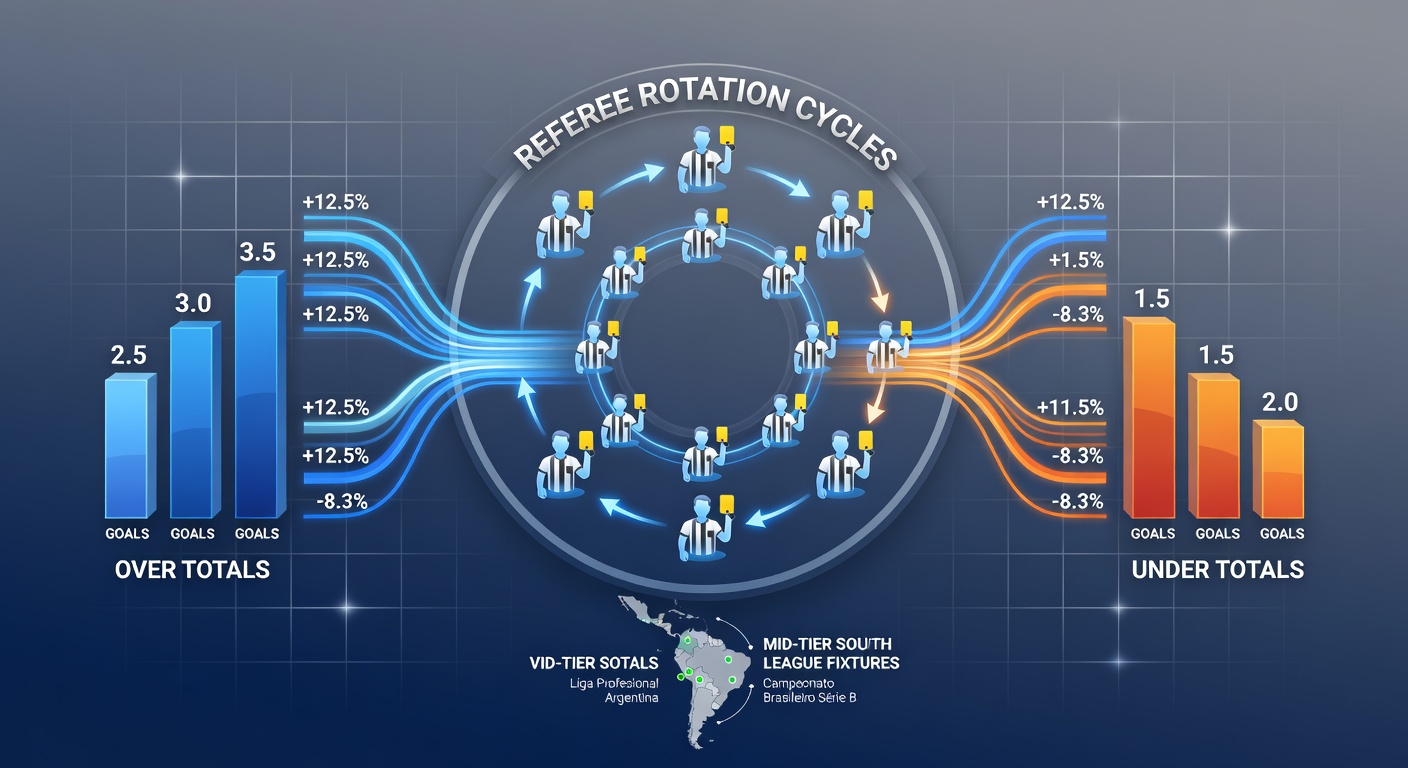
Referee rotation cycles have emerged as a measurable factor in how over/under totals develop across mid-tier South American leagues, where schedules assign officials on structured patterns rather than repeated appointments to the same clubs. Data from the 2025-2026 seasons shows these cycles alter foul frequency, set-piece volume, and tempo control in measurable ways, particularly in competitions such as the Argentine Primera Nacional and Brazilian Serie B.
Rotation Schedules and Their Structure
Leagues in Argentina, Brazil, and Uruguay maintain rotation protocols that assign referees across geographic zones and club pairings on intervals ranging from three to six matchdays. The Argentine Football Association publishes these assignments in advance, creating predictable sequences that analysts track for patterns in card issuance and stoppage time. Similar frameworks operate through Brazil's CBF, where regional subgroups receive staggered appointments to limit familiarity between officials and teams.
These rotations produce shifts in average goals because individual referees maintain distinct thresholds for physical challenges and advantage play. Matches overseen by officials with higher foul thresholds tend to sustain longer passages of open play, while those enforcing stricter interpretations generate more interruptions and set-piece opportunities that can either suppress or elevate scoring depending on execution quality.
Scoring Pattern Variations Across Cycles
Statistical reviews covering the period through May 2026 indicate that over totals rise when rotation brings referees who average fewer than 22 fouls per match into fixtures between mid-table sides. Under totals appear more frequently when officials with elevated card rates enter the same matchups, as defensive units adjust positioning to avoid sanctions. Observers note these effects concentrate in the second half, where fatigue amplifies the impact of early card accumulation.
One dataset compiled from Primera Nacional fixtures illustrates the point: games featuring referees on their third assignment within a four-week window recorded an average of 2.41 goals, compared with 2.78 goals when the same referees operated on wider spacing. The difference traces to changes in free-kick locations and the willingness of attacking players to contest aerial duels without immediate sanction.
League-Specific Data Points
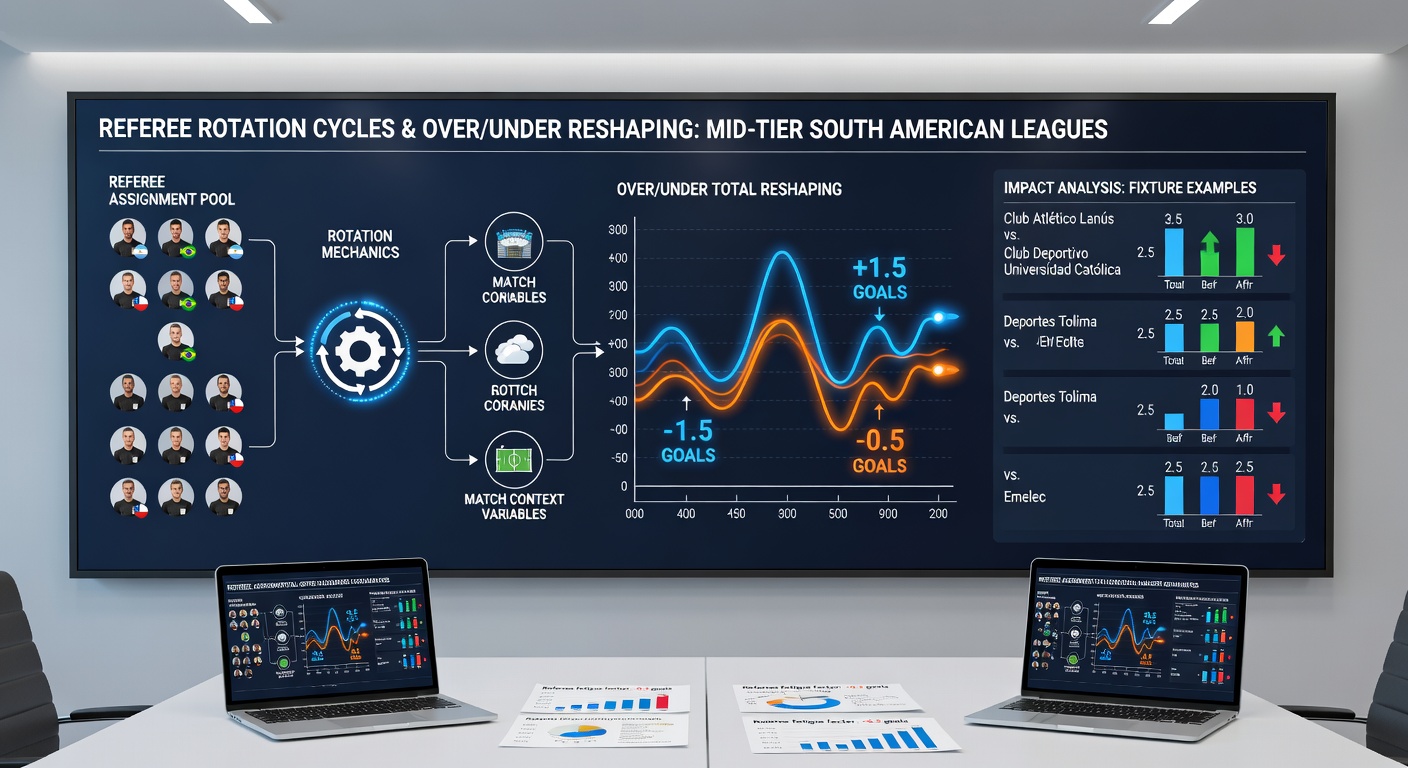
Brazilian Serie B provides another window into these dynamics. Rotation patterns there incorporate travel distance as a variable, meaning referees arriving from distant federations often apply more conservative interpretations in the opening thirty minutes. Figures released by the CBF technical department show that such appointments correlate with a 0.3-goal reduction in first-half scoring across the 2025 season and early 2026 matches.
Uruguayan Segunda Division schedules follow a tighter rotation cycle due to the smaller pool of licensed officials. This produces repeated exposure between certain referees and defensive-minded clubs, resulting in fewer penalty awards and a measurable tilt toward under totals when those pairings recur within the same month.
External Factors Interacting with Rotation
Weather conditions and pitch quality interact with referee style during rotation windows. Heavy rainfall common in May across the southern cone tends to reduce the effectiveness of referees who rely on precise positioning to judge contact, leading to fewer stoppages and slightly higher goal counts. Conversely, drier surfaces allow stricter officials to maintain consistent enforcement, which data links to lower totals in midweek fixtures.
Research published by the University of São Paulo's sports analytics group examined 1,200 matches across three South American second-tier leagues and found referee rotation explains approximately 11 percent of variance in total goals after controlling for team strength and venue. The study attributes the remainder to standard performance metrics while confirming rotation as a secondary but consistent influence.
Conclusion
Referee rotation cycles continue to influence over/under outcomes in mid-tier South American fixtures through documented differences in enforcement style and match flow. Leagues that publish assignment schedules in advance enable systematic tracking of these patterns, and data through May 2026 confirms measurable shifts in goal averages tied to specific rotation intervals. Analysts monitoring these cycles combine assignment lists with historical referee statistics to identify environments where totals move away from seasonal norms.