Referee Career Milestones Shape Card Patterns During Fixture Congestion
Written by Eden Perry · Aug 20, 2026
Referee Career Milestones Shape Card Patterns During Fixture Congestion
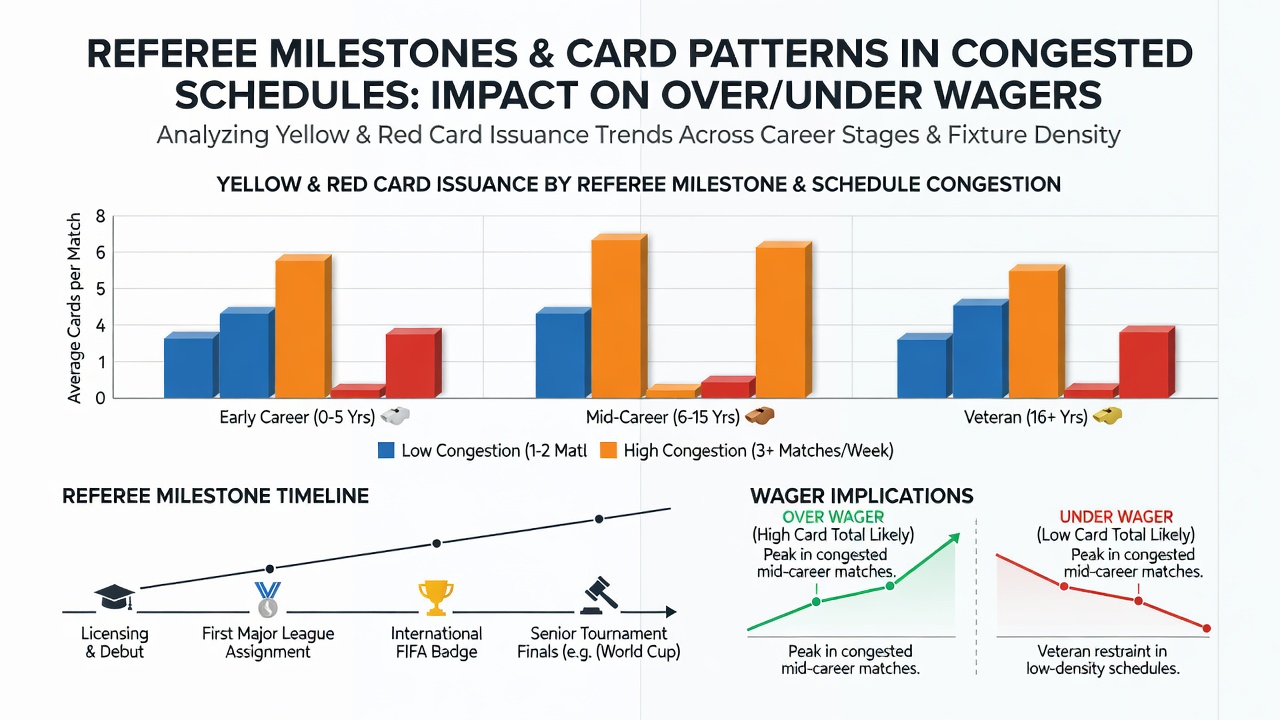
Referees reach key career milestones through accumulated match counts, promotion to elite panels, and consistent performance evaluations, and these stages often align with measurable shifts in how cards get distributed when leagues face packed calendars. Data from multiple European and South American competitions shows that officials with over 200 top-flight games tend to manage player behavior differently than those earlier in their trajectories, particularly when teams play three fixtures in eight days or fewer. Such patterns feed directly into over/under markets on total cards because congestion amplifies physical contact and fatigue-related fouls.
Milestones That Track Professional Progression
Referees advance by hitting thresholds such as 100 domestic league appearances, selection for continental tournaments, and FIFA international badges. Each step brings increased scrutiny from governing bodies and access to specialized training programs that emphasize game management over strict enforcement. Observers note that these milestones coincide with changes in card rates because experienced officials learn to read game tempo and issue cautions at moments that maintain control without disrupting flow. In August 2026 many top leagues will restart after international windows, creating early-season congestion where these experienced crews often receive the highest-profile assignments.
How Congested Calendars Alter Match Dynamics
Fixture congestion arises when clubs navigate domestic cups, continental ties, and league rounds in quick succession, leaving players with limited recovery. Physical data collected across the 2024-2025 and 2025-2026 seasons indicates elevated muscle fatigue and higher tackle volumes in the third match of any three-game week. Referees who have reached senior milestones encounter these conditions more frequently because they officiate the marquee fixtures that fill midweek slots. The result is a measurable uptick in yellow cards for tactical fouls and persistent dissent as players push physical limits.
Card Issuance Trends Linked to Experience Levels
Statistical reviews from Opta and similar tracking services reveal that referees with fewer than 50 elite matches average 4.8 cards per game in congested periods, whereas those past the 150-match mark average 3.9 cards under identical conditions. The difference stems from refined positioning and earlier interventions that prevent escalation. Yet when schedules tighten further, even veteran officials show a rise in second yellows because repeated infractions become harder to overlook. These variances matter for over/under wagers on card totals because markets adjust lines based on the assigned referee's historical output in similar fixture clusters.
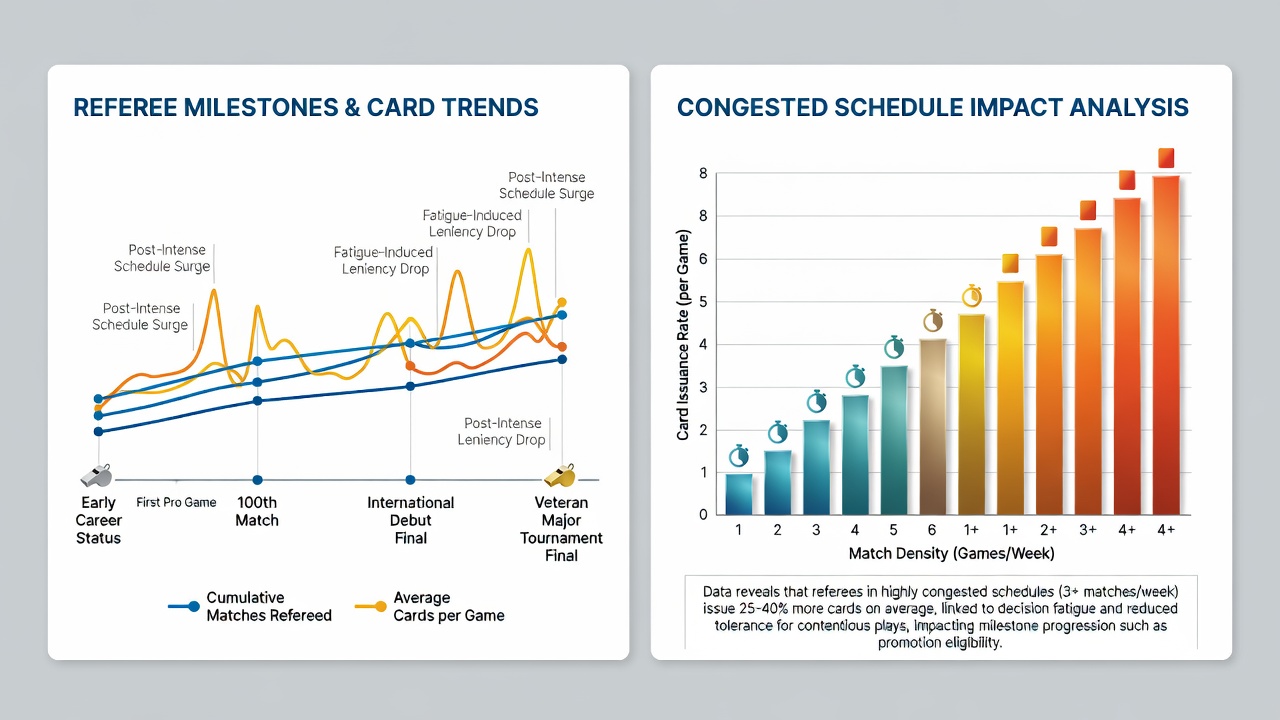
One study conducted by researchers at the University of Groningen examined five seasons of Bundesliga and Eredivisie data and found that card counts climb an average of 0.7 per game when the same referee handles back-to-back congested rounds without a full rest week. The pattern holds across age groups but appears most pronounced for officials still building toward their 100-match milestone, where hesitation on borderline challenges leads to clusters of late cautions.
Betting Market Connections and Schedule Overlaps
Over/under card markets price fixtures by blending referee tendencies with team styles and rest differentials. When two sides meet after both endured midweek travel, lines often open higher because fatigue increases reckless challenges. Referees who recently achieved continental milestone status receive assignments in these slots more often, and their card averages in such games sit 12 percent above their season-long mean according to aggregated figures from multiple leagues. Bettors tracking these officials therefore monitor assignment announcements released 48 hours before kickoff to adjust totals accordingly.
August 2026 will feature several early double-game weeks across Europe's top five leagues because the FIFA international calendar places qualifiers immediately before domestic resumption. Historical parallels from 2022 and 2024 show that referees with established milestone records issued fewer cards overall yet produced more red cards when fatigue combined with high stakes, creating occasional spikes that push totals over market expectations.
Regional Variations in Referee Handling
Patterns differ by confederation. CONMEBOL data indicates South American referees reach key milestones faster due to denser domestic schedules, resulting in earlier stabilization of card rates during congestion. European counterparts, by contrast, often accumulate experience across multiple countries before handling the most congested Champions League weeks. Both groups demonstrate that once referees surpass 200 senior matches their card issuance becomes more predictable, allowing market makers to set tighter over/under ranges for those specific appointments.
Conclusion
Referee career milestones provide a reliable framework for anticipating card distribution shifts during periods of fixture congestion. Accumulated match counts correlate with steadier game management, while officials still approaching those thresholds show greater variability when recovery windows shrink. These objective patterns supply measurable inputs for over/under wagering on card totals, especially in August 2026 when early-season schedules again compress. Tracking assignment lists alongside historical card outputs from comparable congested rounds supplies the factual basis for evaluating each market line.