Nutrition Scheduling Impacts on Late-Match Energy Levels and Spread Movements in Extended Tennis Encounters
Written by Sam Perry · Jun 25, 2026
Nutrition Scheduling Impacts on Late-Match Energy Levels and Spread Movements in Extended Tennis Encounters
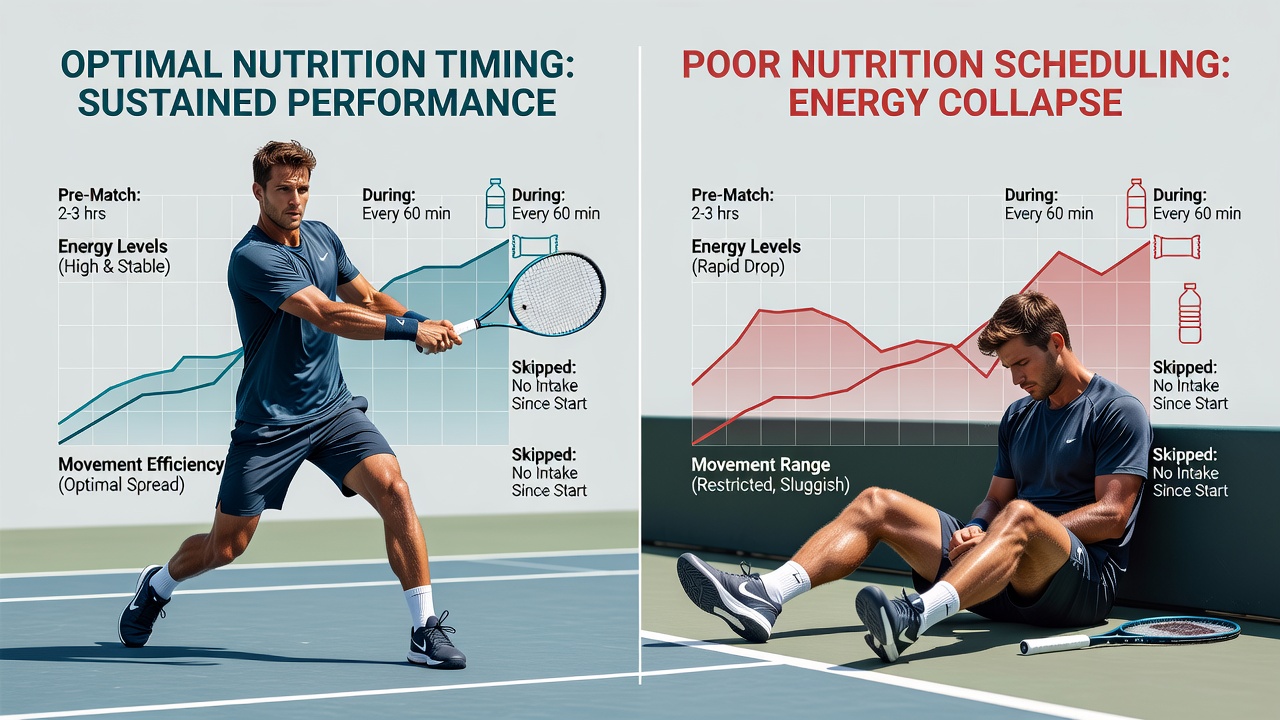
Extended tennis matches often stretch beyond three hours and place heavy demands on glycogen stores while forcing players to manage hydration and electrolyte balance under variable conditions. Researchers have documented how the timing of carbohydrate intake and fluid replacement directly shapes energy availability in the later stages of five-set encounters. Data from professional circuits show that athletes who follow structured feeding windows during changeovers sustain rally intensity longer than those who delay consumption until noticeable fatigue appears.
Core Principles of Nutrition Timing in Tennis
Studies indicate that players benefit from consuming 30 to 60 grams of carbohydrates every hour of play because this replenishes muscle glycogen before depletion accelerates. Observers note that matches played under high heat and humidity accelerate fluid loss and that scheduled sips of electrolyte solutions every 15 to 20 minutes help stabilize blood volume and cognitive focus. Those who space protein and simple sugars appropriately avoid gastrointestinal distress that can arise from large boluses taken only at set breaks.
Evidence from multiple Grand Slam events reveals consistent patterns where athletes who begin matches with a balanced pre-match meal containing complex carbohydrates and moderate protein maintain steadier service speeds and movement efficiency after the two-hour mark. In contrast, irregular intake correlates with measurable drops in first-serve percentage and increased unforced errors during deciding sets.
Energy Depletion Patterns in Prolonged Encounters
Physiological monitoring during Australian Open and Wimbledon contests demonstrates that blood glucose levels begin to fluctuate noticeably after 120 minutes when carbohydrate feeding is inconsistent. Players who skip mid-match fueling experience steeper declines in maximum voluntary contraction of leg muscles and slower recovery between points. These physiological shifts become visible in statistics such as winners-to-errors ratio and average rally length during the final set.
June 2026 schedules include several best-of-five tournaments on outdoor surfaces where temperature swings can exceed 10 degrees Celsius between afternoon and evening sessions. Data collected across similar conditions in prior years show that athletes who adjust nutrition windows to account for these changes preserve higher stroke accuracy and reduce double-fault frequency in extended play.
Connections to Betting Spread Adjustments
Bookmakers incorporate player conditioning metrics into real-time odds models and late-match energy availability ranks among the variables that influence handicap and spread movements. When one competitor demonstrates superior nutrition management through sustained performance statistics, markets often tighten the spread in that player's favor as the encounter lengthens. Historical figures from ATP and WTA extended matches reveal that spreads move by an average of 0.8 to 1.2 games in response to observable fatigue indicators after the third set.
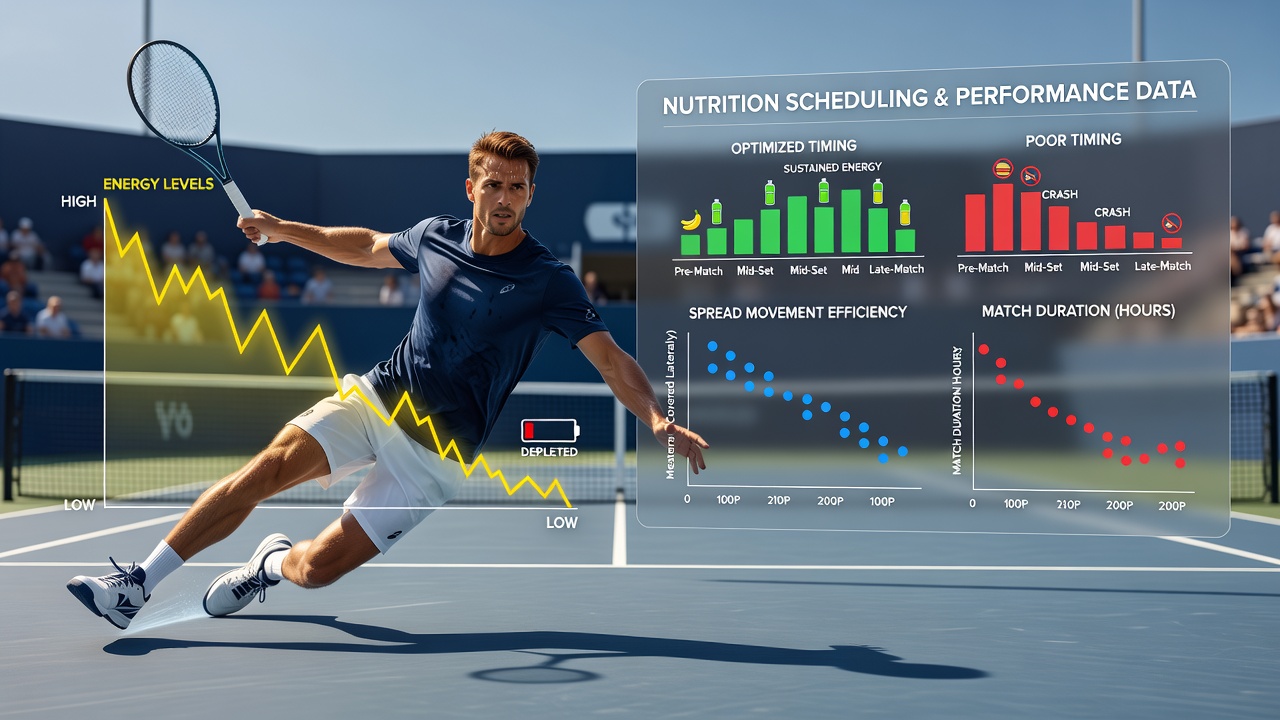
Research published by the Journal of the International Society of Sports Nutrition highlights how pre-planned carbohydrate protocols correlate with fewer performance drops in deciding sets. Those findings align with betting market records where lines adjust more sharply when one player visibly slows between points while the opponent maintains consistent movement. Such shifts occur because oddsmakers integrate wearable-derived heart-rate recovery data and historical endurance profiles into their algorithms.
Regional and Environmental Factors
Climate variations across tournaments require tailored hydration strategies that affect both physical output and market perceptions. Athletes competing at high-altitude venues in South America often adjust sodium intake schedules to counter lower oxygen availability and this preparation shows up in reduced medical timeouts during later stages. Figures from the Australian Institute of Sport indicate that players who adapt electrolyte timing to specific tournament conditions exhibit steadier performance curves and fewer late-match errors.
Travel across time zones adds another layer because circadian disruption can alter gastric emptying rates and appetite signals. Competitors who maintain consistent feeding intervals despite schedule changes tend to avoid the sharp energy valleys that prompt conservative play and increased error rates. These patterns feed into spread calculations because markets price in the likelihood of sustained baseline rallies versus shortened points when fatigue mounts.
Conclusion
Nutrition scheduling emerges as a measurable factor that shapes both on-court endurance and subsequent spread movements in extended tennis matches. Data across multiple surfaces and climates confirm that athletes who time carbohydrate and fluid intake according to match duration preserve performance metrics longer and that these outcomes register in betting line adjustments. Continued collection of physiological and performance statistics will refine understanding of how these elements interact during future high-stakes encounters.