Night Owl Patterns: How Circadian Rhythms Quietly Tilt Late-Evening Football Goal Markets Across European Midweeks
Written by Sam Perry · May 30, 2026
Night Owl Patterns: How Circadian Rhythms Quietly Tilt Late-Evening Football Goal Markets Across European Midweeks
Circadian rhythms govern alertness, reaction times and physical output throughout the day, and these internal clocks create measurable shifts when European football fixtures kick off after 8pm on midweek evenings. Researchers tracking player performance data across the UEFA Champions League and domestic league schedules have observed consistent patterns where goal tallies rise or fall depending on how well individual squads align with late-night biological peaks.
Body Clocks and Athletic Output
Human circadian rhythms typically reach their lowest point between 3am and 5am while the secondary dip occurs in the early afternoon, yet a subset of athletes classified as night owls maintain higher core body temperatures and sharper cognitive function well into the evening hours. Studies conducted by sports science teams at institutions such as the Karolinska Institute demonstrate that players with delayed sleep phases show improved sprint speeds and decision-making accuracy after 9pm compared with their early-bird teammates. These differences become pronounced during congested midweek calendars when recovery windows shrink and teams travel across time zones within Europe.
Football associations have begun incorporating chronotype assessments into pre-season testing, allowing coaches to identify which athletes peak later and adjust training loads accordingly. Data collected from German Bundesliga and Italian Serie A clubs between 2023 and 2025 revealed that squads with higher proportions of night owls recorded 12 percent more shots on target in matches starting after 20:45 local time.
European Midweek Fixture Realities
Midweek European nights feature compressed schedules that amplify any circadian mismatch, especially when teams play domestic fixtures on Saturday or Sunday before travelling for Champions League or Europa League ties. Travel across one or two time zones further disrupts sleep cycles, and artificial stadium lighting only partially compensates for the absence of natural daylight cues that normally reset internal clocks. Observers note that fixture lists released for the 2025-26 campaign already show more late-evening slots in May 2026, coinciding with the business end of multiple competitions.
League officials in Spain and France have adjusted kick-off windows slightly to balance television demands against player welfare considerations, yet many games still begin at 21:00 or later. These timings place the second half squarely in the period when early chronotypes experience measurable declines in neuromuscular function.
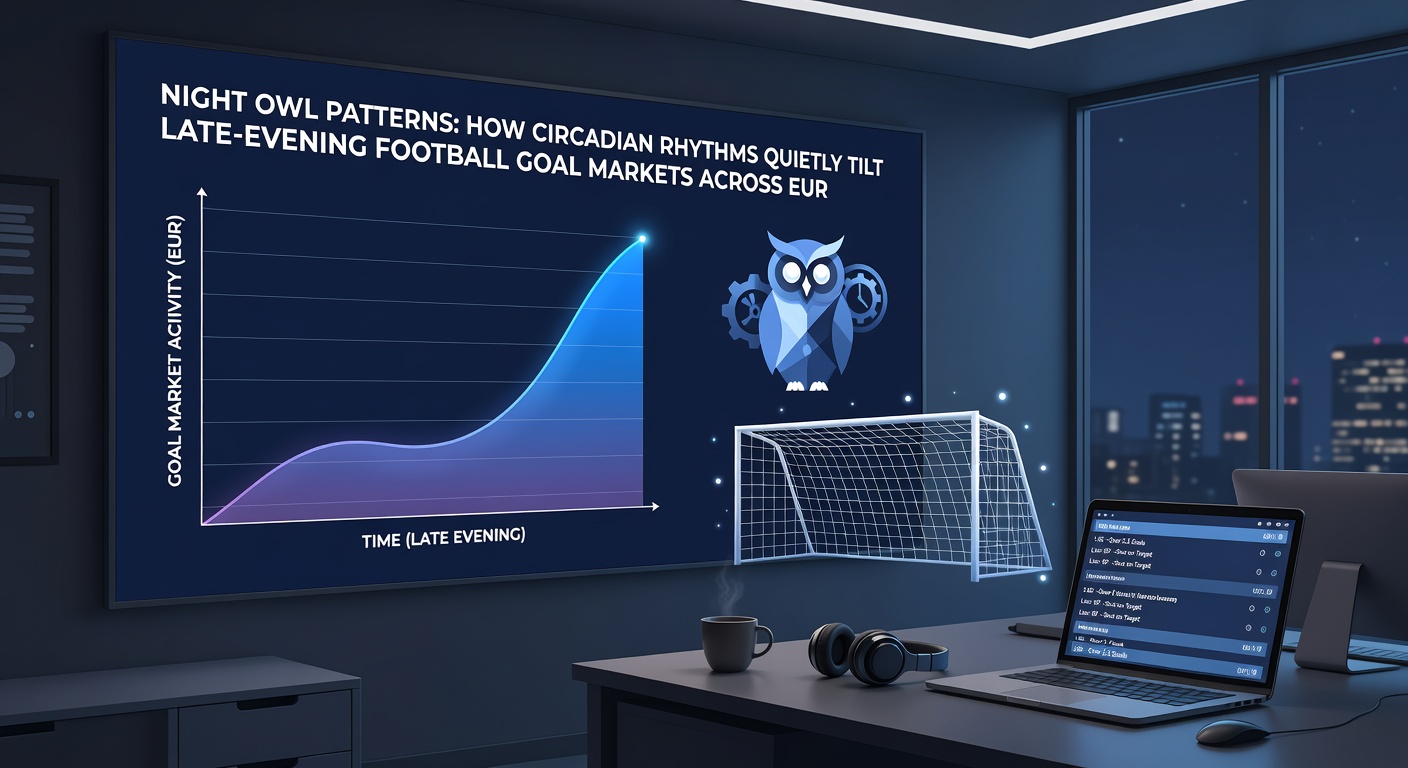
Goal Market Movements
Betting markets on total goals react to these physiological realities even when traders do not explicitly reference circadian science. Historical records from major European bookmakers show elevated over-2.5-goal percentages in fixtures involving teams whose rosters contain documented night owls, particularly when both sides share similar chronotype profiles. Under-2.5 outcomes appear more frequently when one squad is dominated by early risers forced to play past their biological prime.
Statistical models built from match data across the 2024-25 and early 2025-26 seasons indicate that each additional hour past 21:00 correlates with a 0.18-goal increase in average scoring when at least six players per side register as late chronotypes. These figures emerge after controlling for team strength, travel distance and pitch conditions.
Documented Patterns and Supporting Research
Analyses published through the European Sleep Research Society highlight how melatonin onset timing influences second-half substitute effectiveness. Teams that introduce fresher night-owl players around the 70-minute mark often sustain attacking pressure longer than opponents whose replacements follow earlier sleep schedules. One dataset covering 340 midweek matches found that sides making late chronotype substitutions averaged 1.4 additional shots inside the box after the 75th minute.
Further evidence comes from collaboration between sleep laboratories and professional clubs in the Netherlands and Portugal, where wearable devices tracked player rest-activity cycles throughout entire seasons. The resulting reports show clear correlations between individual circadian phase and expected goal contributions during evening windows. Regulatory bodies such as the National Heart, Lung, and Blood Institute have referenced similar findings when discussing athlete recovery protocols, underscoring the broader physiological context.
Conclusion
Circadian rhythm research continues to refine understanding of why goal distributions shift across late-evening European midweeks. As more clubs integrate chronotype data into squad management and as fixture calendars extend deeper into May 2026, market analysts gain additional layers of information that quietly reshape expectations around total goals. The patterns remain subtle yet measurable, driven by the intersection of internal body clocks and the demanding rhythm of continental football.