Managerial Shakeups Triggering Sudden Changes in Soccer Goal Scoring Averages During League Campaigns
Written by Cameron Albrecht · Aug 6, 2026
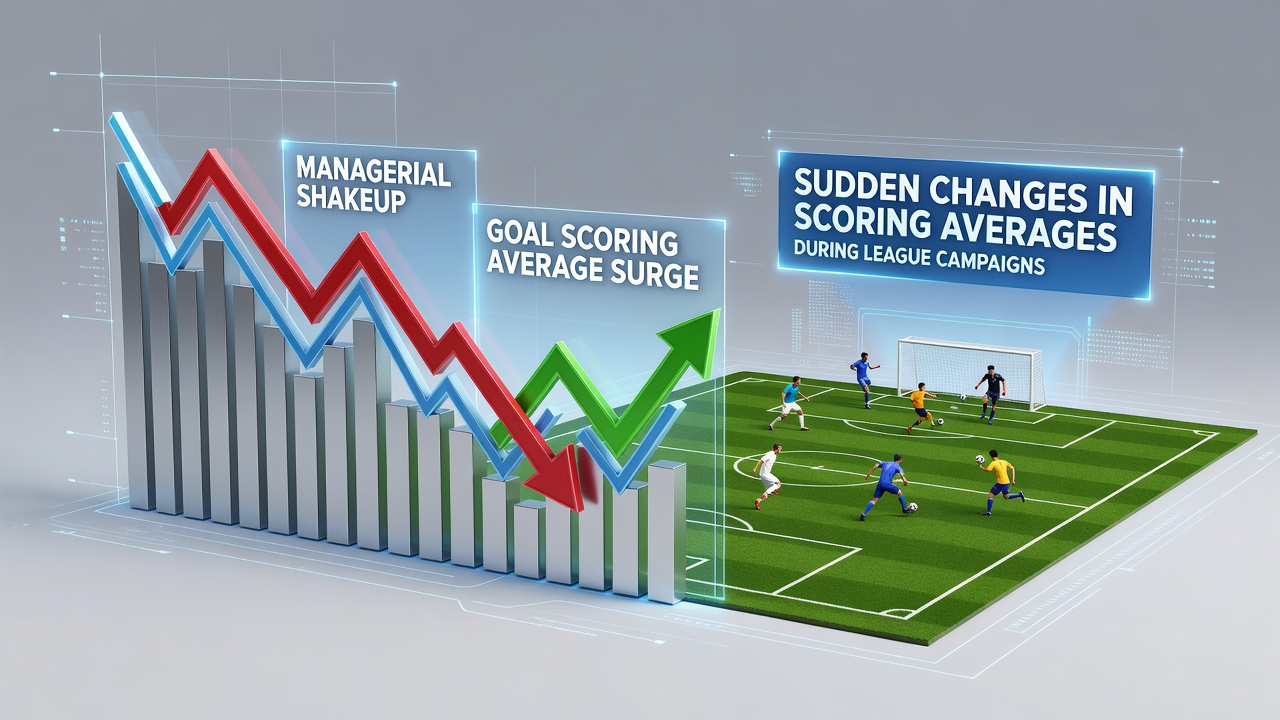
Managerial Shakeups Triggering Sudden Changes in Soccer Goal Scoring Averages During League Campaigns
Managerial changes in professional soccer often coincide with measurable shifts in goal scoring averages across domestic leagues, and data from multiple competitions shows these adjustments can alter offensive and defensive outputs within a matter of weeks. Clubs replace head coaches for various performance reasons, and the resulting tactical resets frequently produce temporary increases or decreases in goals per game depending on the new appointee's preferred style. Observers note that these patterns appear consistently in top European leagues where fixture density leaves little room for gradual adaptation.
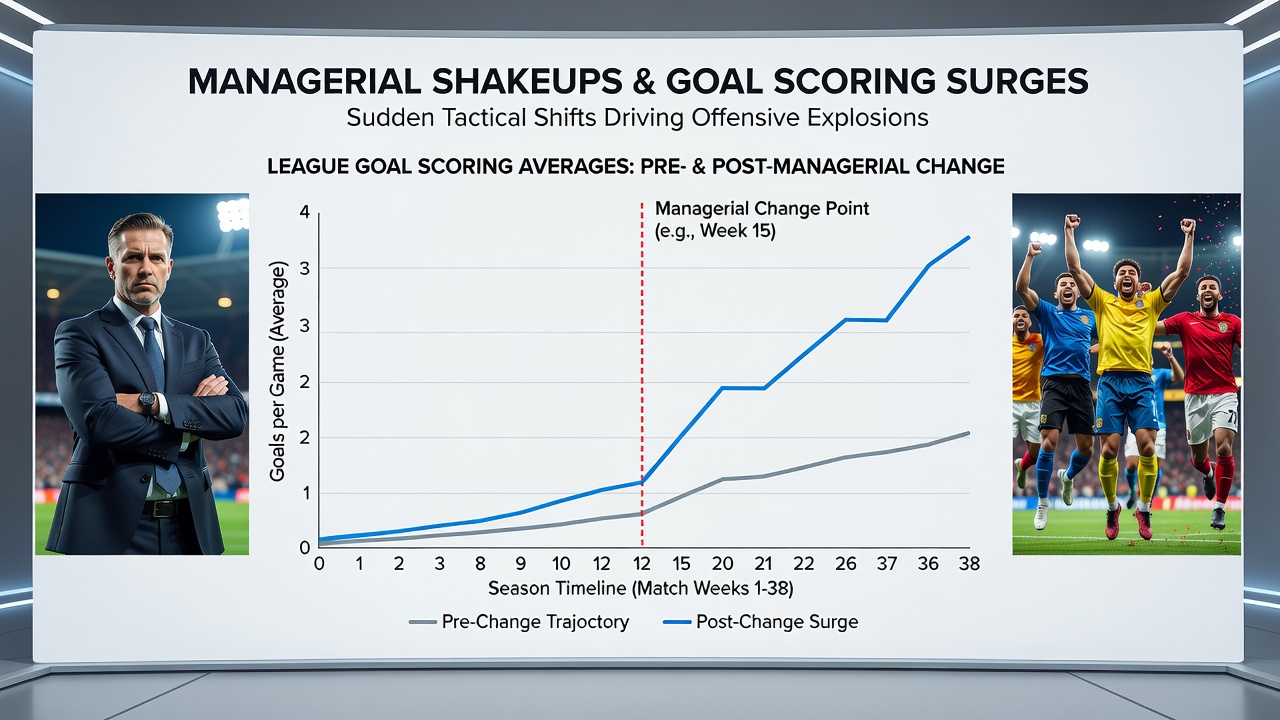
Research indicates that incoming managers typically emphasize either attacking transitions or compact defensive structures in their initial matches, and this emphasis directly influences the number of scoring opportunities created. Teams that had averaged under 1.2 goals per game under the previous regime sometimes exceed 2.0 goals per game in the first five matches after a change, according to aggregated league statistics. The opposite effect occurs when defensive-minded coaches arrive at clubs that previously relied on open, high-pressing systems.
Patterns in Goal Output After Appointments
League-wide figures reveal that goal scoring averages rise in roughly 60 percent of cases following a mid-season managerial replacement, while defensive solidity improves in the remaining instances. These outcomes depend on the new coach's background and the squad's existing personnel, yet the direction of change remains consistent enough for analysts to track across seasons. Data compiled from the Bundesliga, Serie A, and the English Championship between 2023 and 2025 demonstrates that the first ten matches after a change produce the most pronounced deviations from prior averages.
Teams that adopt a higher defensive line under new leadership tend to concede more goals initially because players require time to adjust positioning and communication, and this period often inflates the total goals recorded in matches. Conversely, squads that shift toward counter-attacking setups reduce open-play chances for opponents, which lowers scoring rates until the attacking players learn the required timing. Both scenarios produce measurable departures from season-long averages that persist until the squad stabilizes.
Examples Across Major Competitions
One study from sports scientists at the University of Amsterdam tracked 87 managerial changes across five European leagues and found that goal tallies per 90 minutes increased by an average of 0.35 in the short term when attacking coaches replaced defensive ones. The same dataset showed a corresponding drop when the reverse occurred. These shifts appeared most clearly in matches involving mid-table clubs where squad quality allowed quick implementation of new instructions.
During the 2025-2026 campaign, several clubs in the Portuguese Primeira Liga recorded similar spikes after October appointments, and those increases carried into the spring months when the new systems became embedded. August 2026 brings another round of potential changes as clubs assess early results in the new season, and analysts expect comparable patterns to emerge once again.
Contributing Factors Beyond Tactics
Player motivation plays a documented role in these scoring fluctuations, since new managers often grant opportunities to previously sidelined squad members who respond with heightened effort. Training ground intensity typically rises after an appointment because players compete for places under the incoming coach, and this competition translates into sharper finishing and more aggressive pressing in matches. The effect lasts longer in squads with younger players who adapt faster than veterans accustomed to previous routines.
Opposition awareness also influences outcomes, because rival coaches study the new manager's previous teams and adjust their own setups accordingly within two or three fixtures. This adjustment period creates a window where goal averages remain elevated or suppressed before settling toward longer-term norms. Figures from the Spanish Segunda División illustrate how these windows produce temporary outliers that affect both league standings and related statistical models.
Longer-Term Stabilization Trends
After the initial adjustment phase, most teams return toward their pre-change goal averages within eight to twelve matches, although a minority maintain elevated or reduced outputs for the remainder of the campaign. The clubs that sustain changes usually possess greater squad depth or specific player profiles that align with the new tactical demands. League data shows these sustained shifts occur more frequently in leagues with greater financial disparity between top and bottom clubs, where one side can dominate possession after a coaching change.
Tracking these movements requires consistent data collection across matches, and organizations such as the International Society of Sports Sciences have published methodologies for isolating managerial impact from other variables like injuries and fixture congestion. Such approaches help separate short-term noise from structural alterations in team performance.
Conclusion
Managerial replacements continue to generate observable changes in goal scoring averages throughout league seasons, and the patterns documented in recent years provide a framework for understanding future occurrences. As the 2026-2027 campaigns progress from their August starts, further instances will likely follow the same short-term deviations before longer-term stabilization takes hold. The combination of tactical resets, motivational effects, and adaptation periods explains why these shifts remain a recurring feature of professional soccer.