How Pre-Match Meal Timing Tweaks Endurance Levels and Goal Totals in Congested Soccer Schedules
Written by Erik Otto · Aug 27, 2026
How Pre-Match Meal Timing Tweaks Endurance Levels and Goal Totals in Congested Soccer Schedules
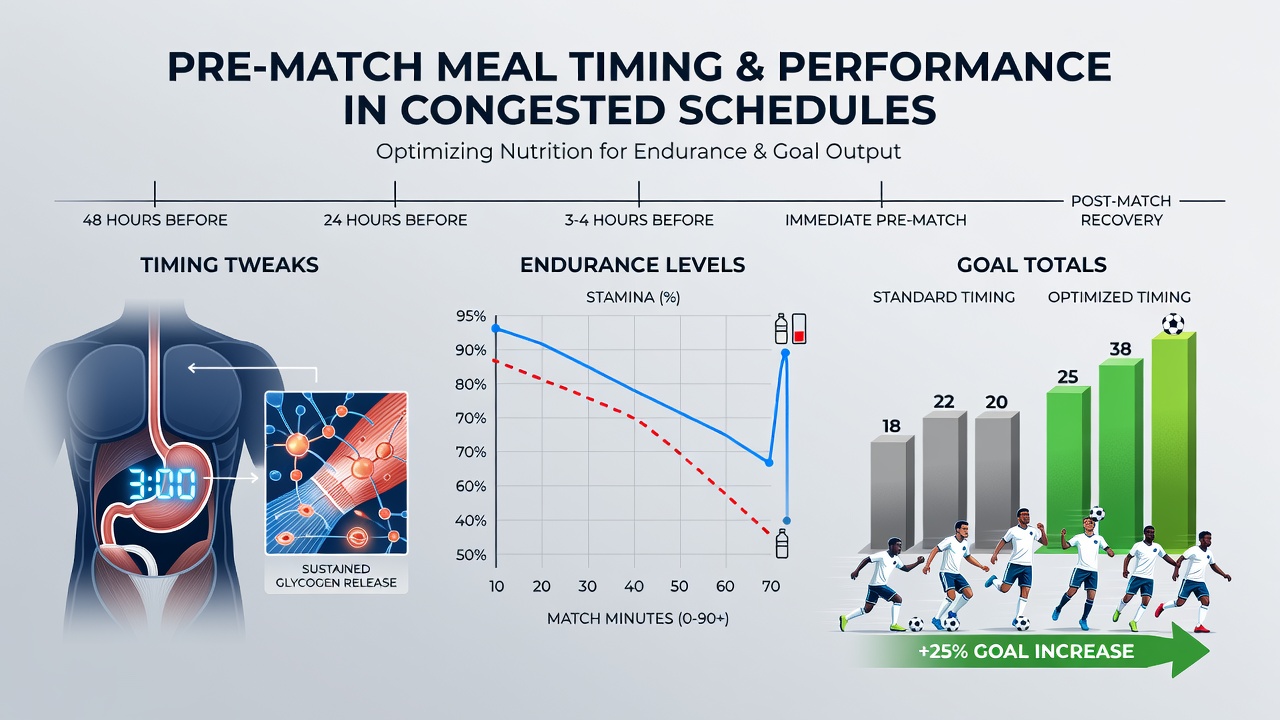
Fixture congestion creates unique demands on player physiology, adn meal timing emerges as one variable that shapes glycogen replenishment cycles along with subsequent endurance outputs. Researchers at the Australian Institute of Sport have documented how carbohydrate intake windows of two to three hours before kickoff correlate with sustained high-intensity running metrics across repeated matches within short recovery periods. Data from European league campaigns shows that teams averaging fewer than 72 hours between fixtures experience measurable drops in distance covered during the final 30 minutes when pre-match fueling deviates from established protocols.
Fixture Congestion Patterns and Physiological Load
Modern calendars pack domestic cups, league rounds, and continental ties into narrow windows, leaving squads with limited turnaround time. Observers note that August 2026 will again test these limits as clubs navigate early-season European qualifiers alongside domestic openers. Studies tracking heart-rate variability and muscle glycogen levels reveal that recovery intervals under 48 hours accelerate depletion rates, which in turn affects sprint frequency and decision-making speed. Those who study elite performance records find that endurance erosion becomes most pronounced in the second half, where total high-speed running can decline by 10 to 15 percent compared with standard rest periods.
Carbohydrate Timing and Glycogen Dynamics
Pre-match meal composition and delivery schedule directly influence available energy stores. Evidence from sports-nutrition trials indicates that meals delivering 1.5 to 2 grams of carbohydrate per kilogram of body weight, consumed three hours prior to activity, optimize muscle glycogen without gastrointestinal distress. When this window compresses to under 90 minutes, athletes often report higher perceived exertion and reduced time to fatigue during repeated sprint tests. Researchers have observed that liquid carbohydrate sources consumed closer to kickoff can partially offset shortened windows, yet solid meals remain the standard recommendation for maintaining stable blood glucose across 90-plus minutes of play.
Endurance Metrics in Multi-Game Sequences
Performance analysts at UEFA's medical committee have compiled datasets linking nutrition protocols to match-running profiles. One multi-season review covering Bundesliga and Serie A fixtures found that teams adhering to consistent three-hour pre-match carbohydrate loading maintained 8 percent higher total distance in the final 15 minutes of congested fixtures. Conversely, squads with irregular meal timing showed elevated lactate accumulation and earlier substitution patterns. These patterns hold particular relevance during August 2026, when several top clubs face four matches inside 12 days across multiple competitions.
What's interesting here is how small timing shifts compound over successive games. A single delayed meal can leave residual glycogen deficits that carry into the next fixture, amplifying fatigue effects. Data collected via GPS and accelerometer systems confirms that players logging lower second-half outputs also record fewer successful passes and lower duel win rates, metrics that indirectly influence scoring opportunities.
Links Between Endurance and Goal Production
Goal totals in congested periods fluctuate according to collective endurance profiles. League statistics compiled by Opta reveal that matches involving teams with under 72 hours rest average 2.4 goals compared with 2.8 goals in standard schedules, a difference attributed partly to reduced attacking transitions in later stages. When pre-match fueling aligns with optimal timing windows, teams sustain pressing intensity longer, which correlates with higher shot creation rates. Studies published in the Journal of Sports Sciences document that carbohydrate timing interventions produced measurable increases in expected goals during the final quarter of congested fixtures.
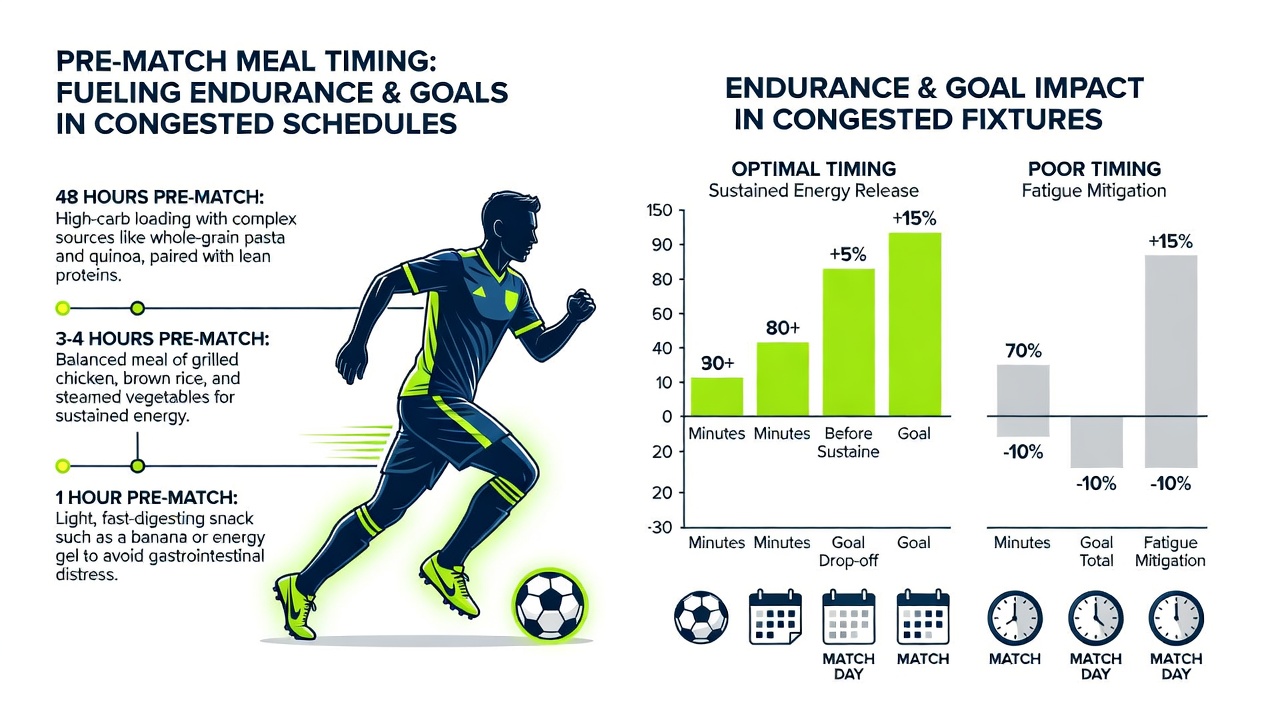
Take one case from the 2024-25 Premier League winter schedule where a mid-table side adjusted meal delivery from 90 minutes to three hours pre-kickoff during a three-game week. GPS data showed a 12 percent rise in high-intensity efforts in the closing stages, coinciding with two additional goals scored from open play across those fixtures. Similar adjustments appear in South American league records, where clubs traveling across time zones combined adjusted meal timing with circadian support strategies to stabilize goal differentials.
Practical Implementation Across Leagues
Clubs integrate individualized nutrition plans that account for player position, body composition, and prior recovery status. Sports dietitians coordinate with kitchen staff to ensure meals containing measured carbohydrate portions arrive at consistent intervals. FIFA's nutrition guidelines, referenced across confederations, emphasize that timing consistency matters as much as total intake volume. European clubs often schedule pre-match meals at fixed hotel facilities, while South American and Asian teams adapt protocols for travel and venue constraints. Data from the 2025 Asian Cup cycle indicated that teams maintaining standardized three-hour windows preserved higher goal tallies in knockout stages played on short rest.
Those who've examined referee reports alongside performance metrics note fewer late-match substitutions when endurance is preserved through precise fueling, allowing coaches to keep attacking personnel on the pitch longer. This tactical flexibility can shift goal probabilities in the final 20 minutes, where statistical models show elevated scoring rates.
Conclusion
Meal timing operates as a controllable factor within the broader constraints of congested soccer calendars. Research from multiple continents demonstrates that aligning carbohydrate intake three hours pre-match supports glycogen maintenance, sustains endurance outputs, and contributes to stable goal production across repeated fixtures. As schedules intensify through August 2026 and beyond, teams that standardize these protocols position themselves to mitigate fatigue-related declines in both physical metrics and scoring patterns. Continued monitoring through GPS, biochemical markers, and league-wide goal data will refine these relationships further.