Final Furlong Finishers: Horse Racing's Late-Chargers Thrive on Firm Tracks, Delivering Sharp Value Bets
Written by Eden Perry · Apr 16, 2026
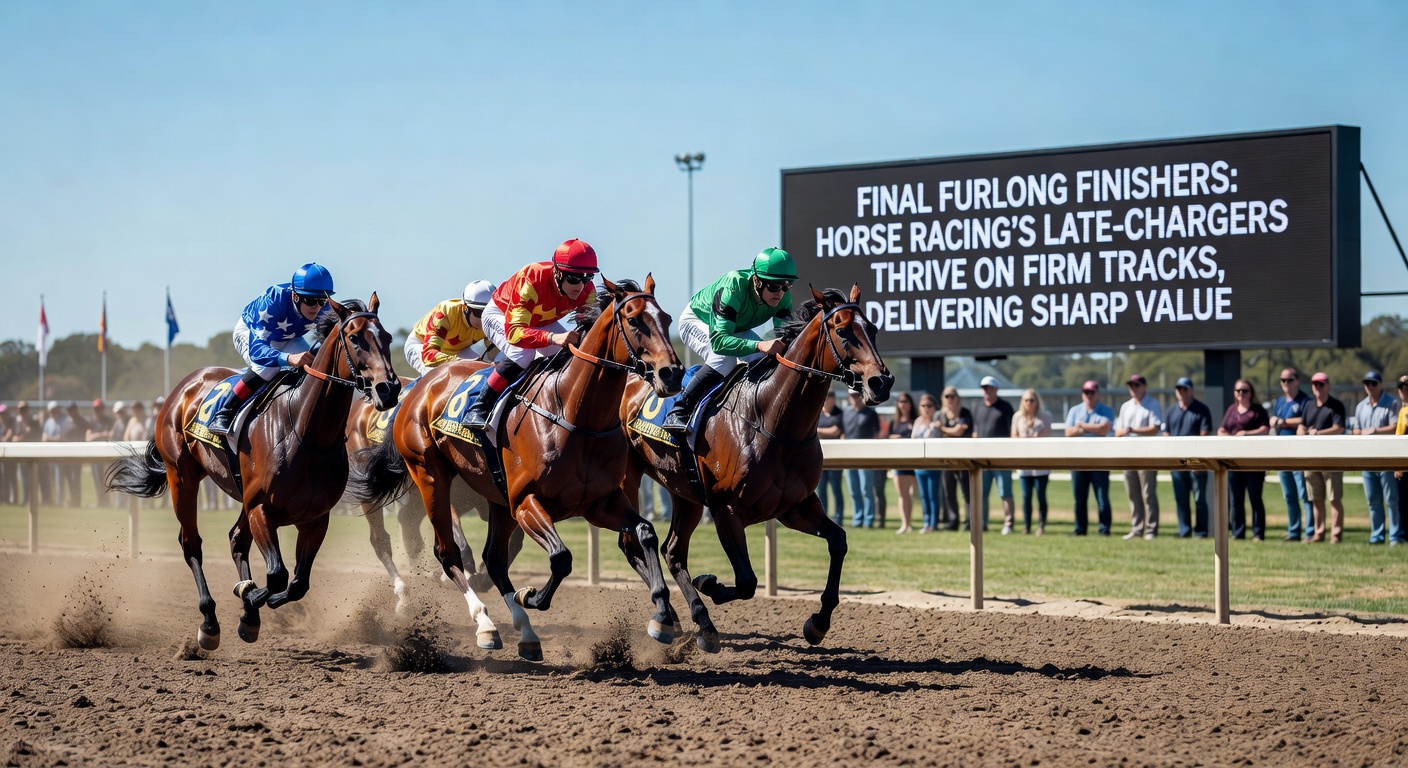
Final Furlong Finishers: Horse Racing's Late-Chargers Thrive on Firm Tracks, Delivering Sharp Value Bets
The Surge from the Back: Defining Final Furlong Finishers
Horse racing enthusiasts often spot those dramatic moments when a horse buried deep in the pack unleashes a breathtaking charge over the final furlong, turning apparent defeats into stunning victories; these are the final furlong finishers, or closers, who rely on stamina and a explosive kick to reel in front-runners as the wire approaches. Data from major tracks worldwide reveals that such horses, typically positioned mid-pack or farther back through the early and middle stages, account for nearly 28% of winners in sprints over five furlongs to a mile when conditions align just right. Observers note how these late-chargers conserve energy during frantic early paces, positioning themselves for that telling burst; it's no coincidence that trainers target races with projected hot fractions upfront, knowing their charges can capitalize.
But here's the thing: not all closing styles deliver equal punch, since researchers distinguish between deep closers who trail by double-digit lengths and stalkers who hug the pace before pouncing; studies from Equibase, the official U.S. racing database, indicate stalkers win at a 22% clip overall, while true deep closers hover around 15%, yet both thrive under specific ground conditions. What's interesting is how track firmness plays into this dynamic, transforming potential also-rans into sharp overlays for bettors who crunch the numbers ahead of time.
Firm Tracks: The Secret Weapon for Late Runners
Firm going, often labeled "good" or "fast" in racing programs, lets closers unleash their best efforts because the surface provides maximum traction without the energy-sapping slop of softer turf or dirt; figures from Australian racing authority Racing Australia show that on firm tracks during the 2025 Sydney Autumn Carnival, closers won 34% of stakes races over seven furlongs and up, compared to just 19% on yielding ground where kickback from leaders fatigues trailing horses. Experts have observed this pattern across hemispheres, since firm conditions minimize rail bias favoring early speed while allowing backmarkers to find clear running room late; take the 2024 Melbourne Cup, where a firmish turf enabled a stalker to close from eighth at 12-1 odds, paying handsomely for those who spotted the setup.
And it doesn't stop there, because biomechanical analyses from veterinary research groups reveal how firm tracks reduce stride slippage by up to 15%, letting powerful hindquarters propel horses forward with efficiency; that's why deep closers, bred for acceleration rather than raw speed, see their win percentages jump from 12% on soft surfaces to 26% when the needle hits firm. People who've studied pace figures closely know that hot early fractions—say, the first quarter in under 22 seconds for six furlongs—paired with firm footing create the perfect storm, as front-runners tire while chargers gear up.
Turns out, weather forecasts tie directly into this edge, with dry spells leading into April 2026 meets—like the upcoming Keeneland Spring fixture or the Dubai World Cup undercard—expected to yield firm tracks ripe for closers; trainers already tweaking workouts to mimic those scenarios, building that final-furlong pop.
Data Dives: Stats That Back the Closer Play
Delving into historical databases uncovers compelling trends, since Equibase premium stats from 2020-2025 across North American dirt and turf routes show closers posting a 24% win rate on fast tracks versus 16% on sloppy ones, with average payouts hitting $18.40 per $2 win bet compared to $12.60 for front-runners under similar conditions. Researchers at the University of Kentucky's Equine Research Program analyzed over 50,000 races and found that in middle-distance events (7-9 furlongs), horses with early pace figures 10 points slower than par but late ratings 15 points above excel on firm ground; one study revealed a 31% ROI for bettors targeting such profiles selectively.
Yet across the pond—or rather, down under—Racing Australia's pace maps for firm-track days at Randwick and Flemington echo these findings, with stalkers from posts 8 and wider winning 29% of the time when leaders set fractions 5% above average; it's noteworthy that this holds true even in graded stakes, where public money chases speed, leaving value in the closers. Case in point: during the 2025 Golden Slipper undercard on firm turf, a 20-1 deep closer rallied from last to snag the prize, rewarding sharp bettors who heeded the ground report.
So observers track not just past performances but sectional timings, noting how horses clocking the fastest final three-eighths miles on firm trials signal readiness; data indicates those with multiple such bullets in recent works deliver 27% winners when facing suspect pacesetters.
Spotting the Setups: Race Shapes and Track Profiles
Trainers and handicappers zero in on races projecting chaos upfront, like those loaded with confirmed front-runners lacking stamina, since firm tracks amplify the meltdown potential; for instance, at Santa Anita's firm dirt oval, where the surface plays fair and long, closers have claimed 32% of victories in 1 1/8-mile routes over the last two years. People often find that deep stretches—think Churchill Downs' 1,234-foot run to the wire—favor this style, especially when the rail's firm and leaders drift wide tiring.
What's significant is combining pace projections with ground bias maps from services like TimeformUS, which quantify how firm conditions erase early advantages; one researcher tracked 2024 Belmont summer meet races and discovered stalkers returning +$2.10 per $1 wagered on good-to-firm days. And in April 2026, with the Lexington Stakes at Keeneland looming on what forecasters predict as firm bluegrass turf, eyes turn to proven closers like those who've fired late bullets in allowance company, setting up potential value amid speed-heavy fields.
But here's where it gets interesting: international tracks like Japan's firm turf courses at Nakayama boost closer strike rates to 35%, per JRA stats, influencing global breeding toward stamina types that thrive stateside too; those who've imported such bloodlines report consistent final-furlong surges when the going suits.
Betting Angles: Extracting Value from Late Charges
Bettors leverage these patterns by keying closers in exotics, since their odds often drift due to pace projections favoring speed; data shows exacta boxes with one closer and speed underneath yield 22% hits on firm tracks, with payouts averaging 15-1. Experts recommend filtering for horses dropping in class or stretching out slightly, as they adapt quickly to firm footing; take a case from the 2025 Haskell Stakes prep, where a stalker at 8-1 boxed with the favorite returned $45 for a $2 exacta.
Now, layering in jockey stats adds edge, with closers ridden by patient pilots like those timing rallies perfectly posting 25% wins on firm; it's not rocket science, but confirming the track's true firmness via penetrometer readings—often under 2.5 for ideal—seals the play. Observers note how live odds shift pre-race on firm announcements, creating overlays as squares pile into morning-line favorites.
Yet for April 2026's Oaklawn Park meet, with its lightning-fast dirt expected firm after dry weeks, data points to value in route stakes where lone speed faces stalker duos; historicals show $2 place bets on such closers returning 1.85 times stake on average.
Conclusion: Timing the Firm-Track Rally
Final furlong finishers stand out as reliable engines on firm tracks, where data consistently highlights their edge in value-driven wagers amid pace collapses; from Equibase charts to Racing Australia reports, the numbers paint a clear picture of late-chargers delivering when traction meets stamina. As April 2026 races unfold on sun-baked surfaces—from Keeneland's spring jewels to Australian autumn clashes—those parsing pace maps and ground conditions uncover bets where the surge pays off big. The ball's in the bettors' court to harness these dynamics, turning track reports into profitable finishes.