Examining how international travel across time zones impacts recovery times and betting lines in global basketball events
Written by Erik Otto · Jun 1, 2026
Examining how international travel across time zones impacts recovery times and betting lines in global basketball events
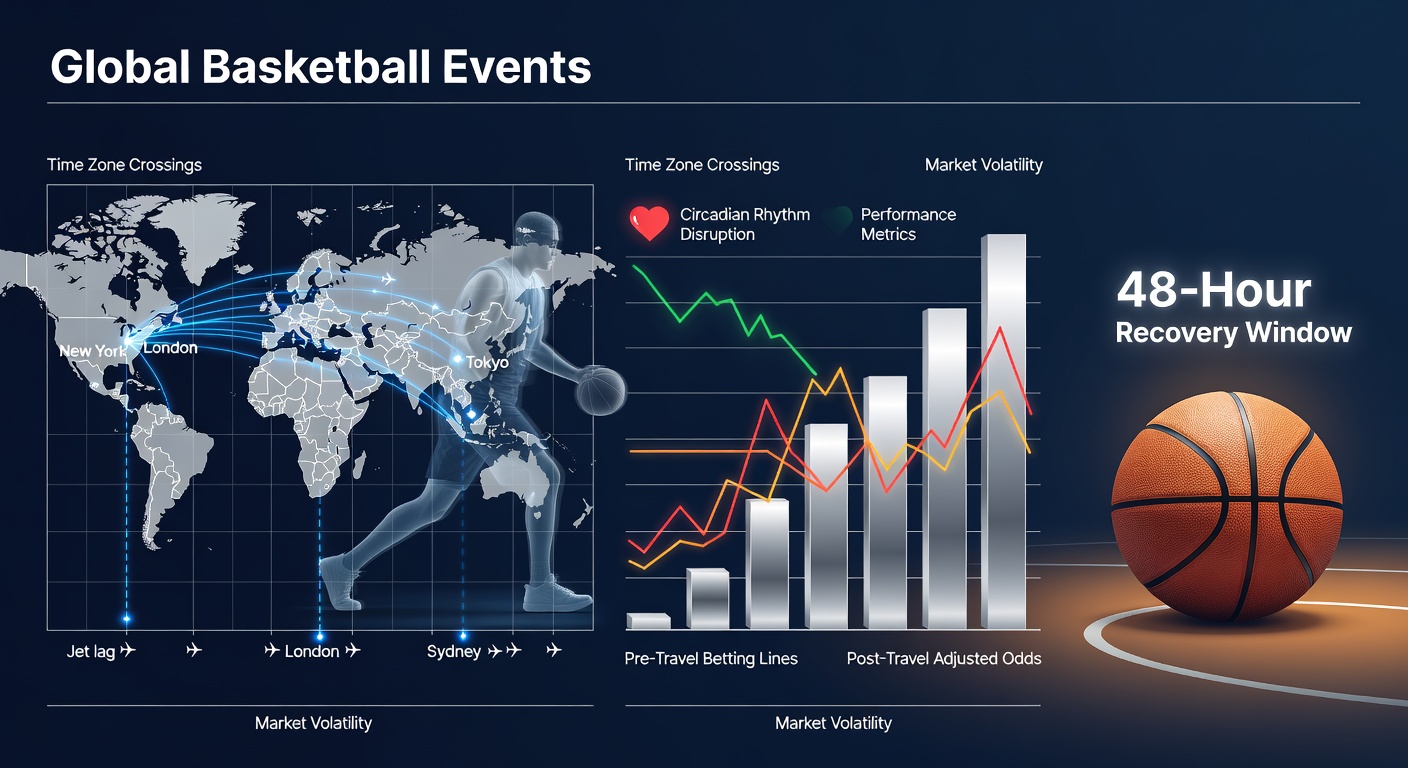
International basketball competitions frequently require teams to cross several time zones within short periods, which creates measurable disruptions in circadian rhythms and physical recovery. Data from sports science monitoring shows that athletes experience delayed adjustment periods when traveling eastward or westward for events such as FIBA tournaments and NBA exhibition series, while betting markets respond by shifting point spreads and totals to account for anticipated performance variances.
Physiological Effects on Recovery
Researchers tracking sleep patterns and performance metrics have documented that crossing five or more time zones typically extends full physiological adaptation to seven to ten days, with partial recovery occurring within three to five days depending on direction of travel and individual chronotype. Studies indicate that core body temperature rhythms and melatonin production shift gradually, leading to reduced reaction times and lower shooting percentages in the initial games after arrival, while muscle recovery markers such as creatine kinase levels remain elevated longer than in domestic travel scenarios.
Those monitoring professional squads note that teams arriving from North America to Asia often display slower transition play and fewer transition opportunities in the first two contests, whereas westward travel tends to produce milder effects because the body can extend its natural day more easily than compress it. Training load data collected by performance staff reveals that coaches adjust practice intensity downward during the first 72 hours to mitigate accumulated fatigue, which in turn influences game scripts and statistical outputs that feed directly into pre-game line calculations.
Historical Patterns in Tournament Data
Analysis of results from the 2019 FIBA World Cup and multiple EuroBasket editions demonstrates that squads traveling across six or more zones posted win percentages approximately 12 percent below their season averages in opening-round matches, with average points per game dropping by 4.8 according to aggregated box-score compilations. Observers recorded similar trends during NBA preseason tours to Europe and Australia, where visiting clubs struggled to maintain defensive rotation speed until the third or fourth contest on foreign soil.
One documented case involved a North American club that crossed nine zones for a midseason exhibition series in Southeast Asia, resulting in a measurable decline in three-point accuracy from 37 percent to 29 percent over the first two games before rebounding closer to baseline levels by game four. Such patterns appear consistently enough that oddsmakers incorporate travel distance and recovery windows into their models, adjusting totals downward when both teams have experienced significant zone shifts or when one side benefits from shorter travel relative to its opponent.
Betting Market Adjustments
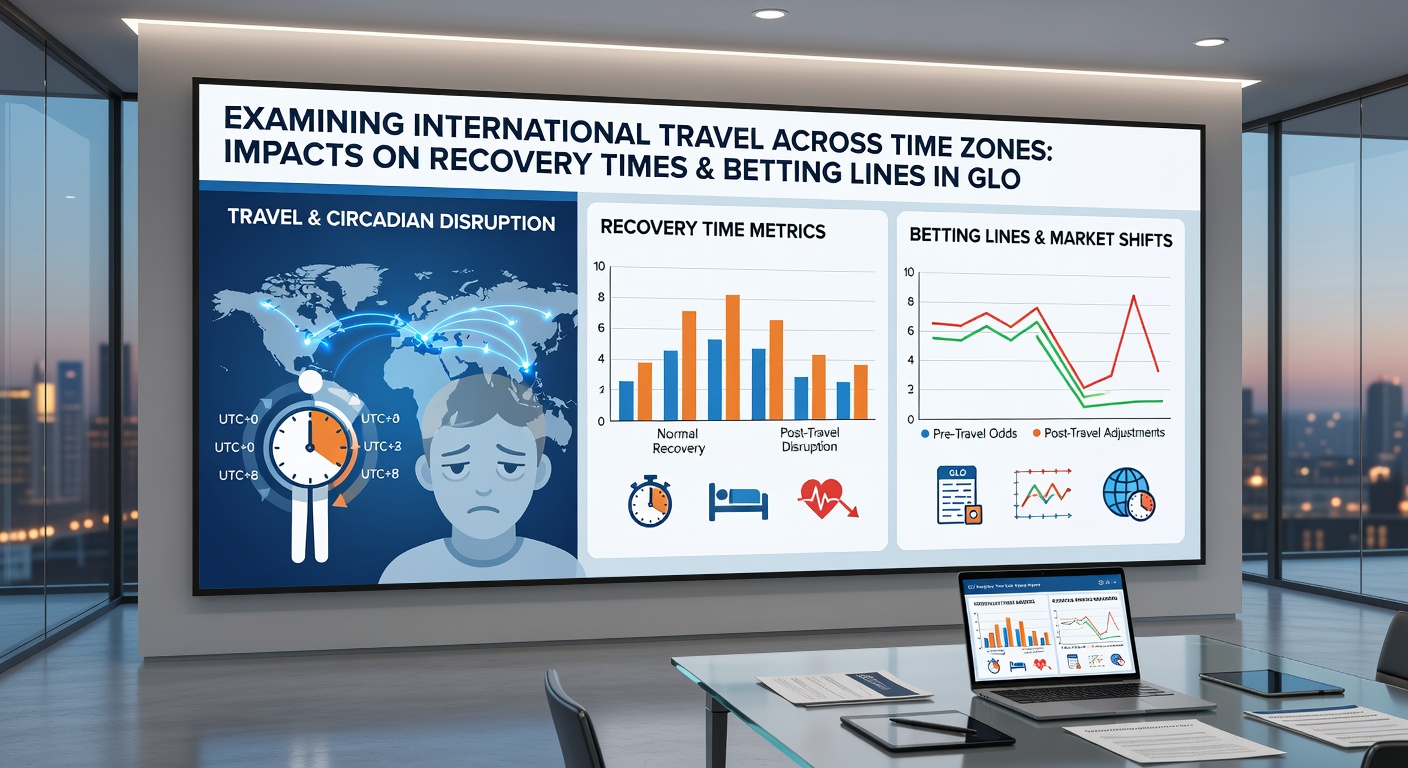
Bookmakers and betting exchanges update lines using algorithms that factor in historical recovery curves derived from wearable device data and game logs, which leads to movements in player props such as points, assists, and rebounds when key contributors are listed as traveling long distances. Figures released by sports analytics firms show that totals in games featuring at least one team with four-plus zones of travel land under the posted number at a rate 6 to 8 percent higher than league averages during the first 48 hours post-arrival.
Live betting markets react further once early-quarter statistics reveal slower pace or reduced efficiency, prompting rapid line shifts that reflect the ongoing adjustment process. Industry reports compiled by organizations such as the International Olympic Committee monitoring group highlight how these performance dips create temporary value opportunities in underdog and reduced-total markets before markets fully recalibrate after several days of competition.
Considerations for June 2026 Events
With several international basketball windows scheduled around June 2026, including preparatory tournaments ahead of larger cycles, teams will again navigate transcontinental routes that cross the Atlantic and Pacific. Performance tracking platforms indicate that federations have begun incorporating structured light-exposure protocols and adjusted training camps to compress recovery timelines, yet measurable variances in early-game efficiency persist across datasets. Betting operators have signaled they will apply refined travel multipliers to opening lines for these fixtures, drawing on updated recovery models that integrate GPS-derived sleep data and heart-rate variability trends.
What's interesting is how these adjustments interact with roster decisions, as coaches sometimes rest star players during the initial recovery window, which further influences prop markets and team totals in ways that extend beyond simple time-zone arithmetic. Data from prior cycles shows that the most pronounced line movements occur when both squads arrive from opposing hemispheres, creating compounding effects on overall scoring output.
Conclusion
Recovery timelines following time-zone travel remain a documented variable in global basketball performance, with consistent correlations to statistical outputs that betting markets systematically incorporate. As competitions approach in 2026, the interplay between physiological adaptation windows and line construction continues to evolve through refined data sources and monitoring technologies, maintaining a direct link between travel logistics and market pricing across international events.